Garage Door Insulation and Energy Efficiency: Saving Money Year-Round
Introduction: The Energy You're Losing Through Your Garage
When most homeowners think about energy efficiency, they focus on windows, attic insulation, and HVAC systems. The garage door — the single largest opening in your home — is almost always overlooked. Yet for the millions of American homes with attached garages, an uninsulated garage door is essentially a massive hole in your home's thermal envelope. Every degree of temperature difference between your garage and the conditioned living space on the other side of that shared wall translates directly into higher energy bills. In Atlantic County, where summer temperatures regularly climb into the nineties and winter nor'easters drive wind chills well below freezing, the energy penalty for an uninsulated garage door is especially steep.
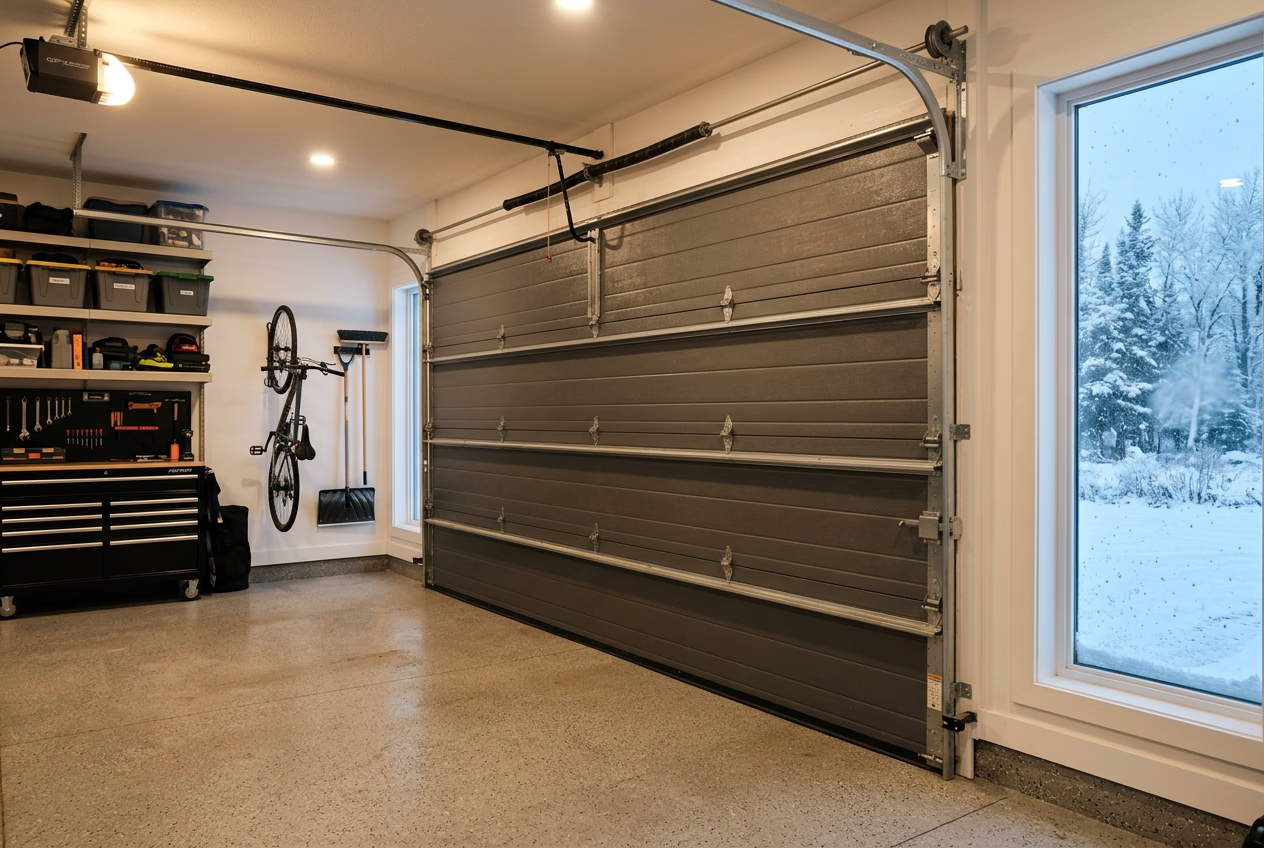
If your garage is attached to your home, the temperature inside that garage directly affects the rooms that share a wall or ceiling with it. An uninsulated garage door allows outside heat to flood in during summer and cold air to penetrate during winter, forcing your heating and cooling systems to work harder to maintain comfortable indoor temperatures. Even if you never set foot in your garage, that thermal transfer is quietly driving up your utility bills month after month. The good news is that upgrading to an insulated garage door — or adding insulation to your existing door — is one of the most cost-effective energy improvements you can make. In this article, we will walk you through everything you need to know about garage door insulation, from R-values and materials to federal tax credits that can help offset the cost.
Understanding R-Values: What They Mean for Your Garage Door
The R-value is the standard measure of thermal resistance — in simple terms, it tells you how effectively a material resists the flow of heat. The higher the R-value, the better the insulation. For garage doors, R-values typically range from about R-6 on the low end to R-18 or higher on premium insulated doors. The right R-value for your home depends on several factors, including how you use your garage, whether it is attached to your living space, and the climate demands of your region. A garage used solely for parking a car in a mild climate may get by with an R-6 to R-8 door, but here in South Jersey, where we experience genuine four-season weather with humid summers and freezing winters, an R-12 to R-18 door is a much smarter investment. Homeowners who use their garage as a workshop, home gym, or hobby space should aim for the highest R-value they can reasonably afford, as the comfort and energy savings compound significantly in conditioned or semi-conditioned spaces.
A breakdown of garage door R-value ranges, their best use cases, and the typical cost difference you can expect when choosing between insulation levels.
Swipe to see more →
| R-Value Range | Insulation Level | Best Use Case | Typical Cost Premium Over Non-Insulated |
|---|---|---|---|
| R-0 to R-4 | None to Minimal | Detached garage, storage only, mild climate | Baseline (non-insulated door) |
| R-6 to R-8 | Moderate | Attached garage, standard vehicle storage, moderate climate | $100 - $300 more |
| R-9 to R-12 | Good | Attached garage with shared living walls, South Jersey climate | $250 - $500 more |
| R-13 to R-18+ | Premium | Workshop, home gym, living space above garage, extreme temperatures | $400 - $800+ more |
“The U.S. Department of Energy emphasizes that doors, including garage doors, are significant contributors to a home's overall energy loss. The Department recommends that homeowners evaluate the insulation and weatherstripping of all exterior doors as a key step in reducing energy consumption and improving indoor comfort, particularly in regions with wide seasonal temperature swings.”
Types of Insulation Materials
Not all garage door insulation is created equal. The material used to insulate your door determines its R-value per inch of thickness, its durability, and how well it performs over time. Understanding the differences between the three most common insulation options — polystyrene, polyurethane, and retrofit insulation kits — will help you make an informed choice whether you are purchasing a new door or upgrading one you already own. Each material has distinct advantages and trade-offs in terms of cost, thermal performance, and structural contribution to the door itself.
The three most common garage door insulation materials and how they compare:
- Polystyrene (EPS/XPS Foam Boards): Rigid foam panels that are cut to fit inside each door panel. Polystyrene offers a decent R-value of approximately R-3.5 to R-4 per inch of thickness. It is the more affordable insulation option and is commonly found in mid-range garage doors. The panels are lightweight and do not add significant weight to the door. However, because they are inserted as pre-cut blocks rather than bonded to the door skin, small air gaps between the panel and the foam can reduce effective thermal performance. Best suited for homeowners seeking a meaningful insulation upgrade on a moderate budget.
- Polyurethane (Spray Foam): Injected as a liquid between the door's steel skins, polyurethane expands to fill every cavity, gap, and crevice before hardening into a dense, rigid foam. It delivers the highest R-value per inch of any common garage door insulation — approximately R-6.5 per inch — meaning a standard two-inch-thick door panel can achieve R-13 or higher. Beyond its superior thermal performance, polyurethane bonds to the steel skins and dramatically increases the structural rigidity and dent resistance of the door. This makes it the premium choice for homeowners who want the best energy efficiency, the quietest operation, and the most durable door. The trade-off is a higher upfront cost compared to polystyrene.
- Retrofit Insulation Kits (DIY): For homeowners who are not ready to replace their existing garage door, retrofit insulation kits offer a budget-friendly alternative. These kits typically include pre-cut foam board panels, reflective foil barriers, or fiberglass batts that you attach to the interior face of each door panel using adhesive, clips, or tape. While retrofit kits can improve thermal performance noticeably — often adding R-4 to R-8 depending on the product — they do not match the seamless coverage and structural benefits of factory-installed insulation. They are an excellent stopgap measure for doors that are otherwise in good condition but lack insulation.
When choosing between these options, consider the age and condition of your current door, your budget, and how you use your garage. If your door is more than fifteen years old or showing signs of significant wear, investing in a new polyurethane-insulated door often makes more financial sense than retrofitting an aging unit. For newer doors in good condition, a polystyrene upgrade or retrofit kit can deliver meaningful improvements without the cost of a full replacement. Regardless of the material you choose, proper weatherstripping along the bottom seal, side seals, and top header is essential to complement the door's insulation and prevent air infiltration around the edges.
Local South Jersey Experts
Need Help With Your Garage Door?
Our local South Jersey technicians are ready to help — same-day service available. Don't wait for a small problem to become a big one.
Tax Credits and Incentives
One of the most compelling reasons to upgrade your garage door insulation right now is the availability of federal tax credits designed to encourage energy-efficient home improvements. Under the Energy Efficient Home Improvement Credit — part of the Inflation Reduction Act — homeowners may qualify for a tax credit of up to 30 percent of the cost of qualifying exterior doors, including insulated garage doors that meet ENERGY STAR certification requirements. The credit is capped at $250 per door and $500 total for all exterior doors in a given tax year, but it can be claimed annually through 2032, meaning you can spread improvements across multiple years if needed. To qualify, the garage door must meet specific U-factor and Solar Heat Gain Coefficient (SHGC) criteria established by ENERGY STAR, and you must have documentation from the manufacturer confirming compliance. The door must be installed at your primary residence — rental properties and new construction do not qualify.
“ENERGY STAR confirms that qualifying exterior doors, including garage doors, are eligible for the Energy Efficient Home Improvement Credit. The program outlines specific performance criteria that doors must meet and provides guidance on required manufacturer certifications and documentation homeowners need to claim the tax credit on their federal return.”
Beyond the federal credit, New Jersey homeowners should also explore state-level utility programs and rebates that may further offset the cost of energy-efficient upgrades. Programs offered through local utilities in the Atlantic County area periodically include rebates for insulation improvements and energy audits. When combined with the federal tax credit and the ongoing savings on your monthly energy bills, the true out-of-pocket cost of an insulated garage door can be significantly lower than the sticker price. Atlantic County Garage Doors can help you identify qualifying products and ensure your installation meets all requirements for claiming available credits. We recommend consulting a tax professional for personalized guidance on your specific situation, but our team is always happy to point you in the right direction and provide the manufacturer documentation you will need.
Upgrade Your Insulation with Atlantic County Garage Doors
Whether you are looking to replace an aging, uninsulated garage door with a modern energy-efficient model or simply want to explore retrofit insulation options for your existing door, Atlantic County Garage Doors is your trusted local partner for the job. Our team has extensive experience installing insulated garage doors from the industry's leading manufacturers, and we understand the specific climate demands of South Jersey's coastal environment. We offer a free energy assessment where one of our technicians will evaluate your current garage door's insulation performance, inspect your weatherstripping and seals, and provide honest recommendations tailored to your budget and goals. There is never any pressure and never any obligation — just straightforward advice from professionals who care about helping our neighbors save money and stay comfortable.
We proudly serve homeowners throughout Egg Harbor Township, Hammonton, Galloway, Absecon, Pleasantville, Somers Point, Margate, Ventnor, and all surrounding communities in Atlantic County. From consultation and product selection to professional installation and ongoing maintenance, we handle every step of the process so you can enjoy the benefits without the hassle. Ready to stop losing energy through your garage door and start saving money year-round? Contact Atlantic County Garage Doors today at 609-663-9260 to schedule your free energy assessment. Your home — and your wallet — will thank you.